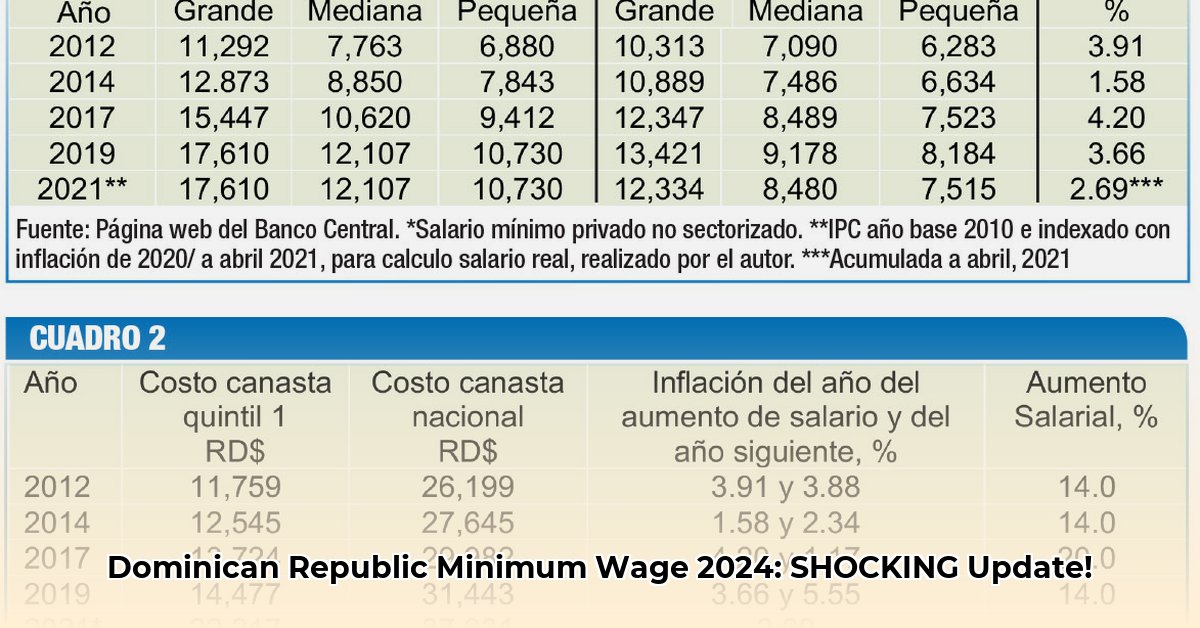
The Dominican Republic implemented a significant minimum wage increase in 2024, a two-phased adjustment impacting businesses, workers, and the national economy. This analysis examines the consequences of this change, highlighting areas needing further research.
The 2024 Minimum Wage Hike: A Phased Approach
The minimum wage saw a substantial 19% increase, implemented in two stages: April 2023 and February 2024. This staggered approach aimed to mitigate potential economic shocks, but its effectiveness remains a key question. How did this phased rollout affect businesses' ability to adapt? Was the staggered implementation ultimately beneficial in lessening any negative economic fallout?
Differential Impacts Based on Company Size
A notable feature of the increase was its tiered nature. The minimum wage adjustment varied depending on the size of the employing company. Larger companies experienced proportionally greater increases than smaller ones. This differential approach reflected a policy attempt to balance worker welfare with the economic realities faced by smaller businesses. But did this policy truly achieve its intended goals? Did it successfully support smaller businesses, or did it create an unfair advantage for larger corporations?
Assessing the Winners and Losers
The impact of the minimum wage increase wasn't uniform, affecting various stakeholders differently:
Larger Businesses: These entities, generally possessing greater financial resources, largely absorbed the increased labor costs without significant disruption. Their capacity to adapt and adjust budgets mitigated any negative effects.
Smaller Businesses: Smaller businesses, operating on tighter margins, faced a more substantial challenge. This increase potentially impacted their profitability, forcing difficult choices—cost-cutting or hiring freezes—highlighting the need for adequate government support mechanisms. Did these support mechanisms exist and were they effective? How did firms respond to the changes?
Workers: The minimum wage increase directly benefited numerous Dominican workers, potentially boosting their purchasing power. However, the extent to which this improvement offsets the rising cost of living warrants further investigation. Did the pay increase truly keep pace with inflation, meaningfully enhancing their quality of life? Further research is crucial to quantify the true increase in purchasing power and the effects on living standards.
The Government: The government's policy aimed to balance employee welfare with business viability. Assessing the success of this strategy requires evaluating employment rates, economic growth, and social welfare indicators. Was this policy successful? To what extent? This will require a careful analysis of various economic and social metrics.
Data Gaps and the Need for Further Research
Complete data on the minimum wage increases across different company sizes remains unavailable. This lack of transparency hinders a comprehensive analysis of the policy's impact. Critical areas requiring further investigation include:
Comparative Analysis: How does the Dominican Republic's minimum wage compare to other Caribbean nations? A comparative analysis will provide valuable context. How does the Dominican Republic’s system compare to minimum wage laws in other countries?
Inflationary Pressures: What is the correlation between the wage hike and inflation? Did the wage increase effectively counteract the effects of inflation on workers' purchasing power, and to what extent?
Employment Trends: Did the minimum wage increase affect employment levels? Did companies respond by reducing staffing levels or altering hiring practices? This needs to be carefully investigated to assess the true effects of the policy.
Small Business Support: What specific support mechanisms were available to small businesses to help them cope with the increased labor costs? How impactful were these mechanisms? What would make future programs more effective?
The Path Forward: Long-Term Monitoring
The long-term effects of the 2024 minimum wage increase remain to be seen. Continuous monitoring and research are crucial to fully assess its impact on the Dominican economy and its citizens. Further analysis could also provide valuable insights into developing more effective future minimum wage policies. What are the implications for future minimum wage strategies?
Small Business Competitiveness and the Tiered Minimum Wage
The tiered minimum wage system in the Dominican Republic, while aiming for equity, poses challenges for small businesses. The higher labor costs significantly affect profit margins, particularly for those operating on already tight budgets. This poses a threat to their competitiveness, and requires further investigation to comprehensively understand its effects. What are the specific challenges faced by small businesses? How can support programs help these businesses overcome these challenges?
Three Pivotal Points:
- The 2024 minimum wage increase in the Dominican Republic was implemented in two phases, resulting in a total increase of 19%.
- The increase was tiered, with larger firms experiencing proportionally larger increases than smaller firms.
- Significant data gaps exist, necessitating further research to fully assess the economic and social impacts.